New research is revealing that chiropractic adjustments may influence how effectively the brain activates muscles—helping us understand why spinal function could matter for strength, performance and fatigue.
Where does strength really come from?
Strength is not simply determined by the size of your muscles. Every movement begins with a plan in your brain, which sends commands through the spinal cord telling your muscles when and how strongly to contract. At the same time, receptors in your muscles and joints report back to the brain about your body’s position and movement. Strength therefore also depends on how well your brain receives this information and recruits your muscles.
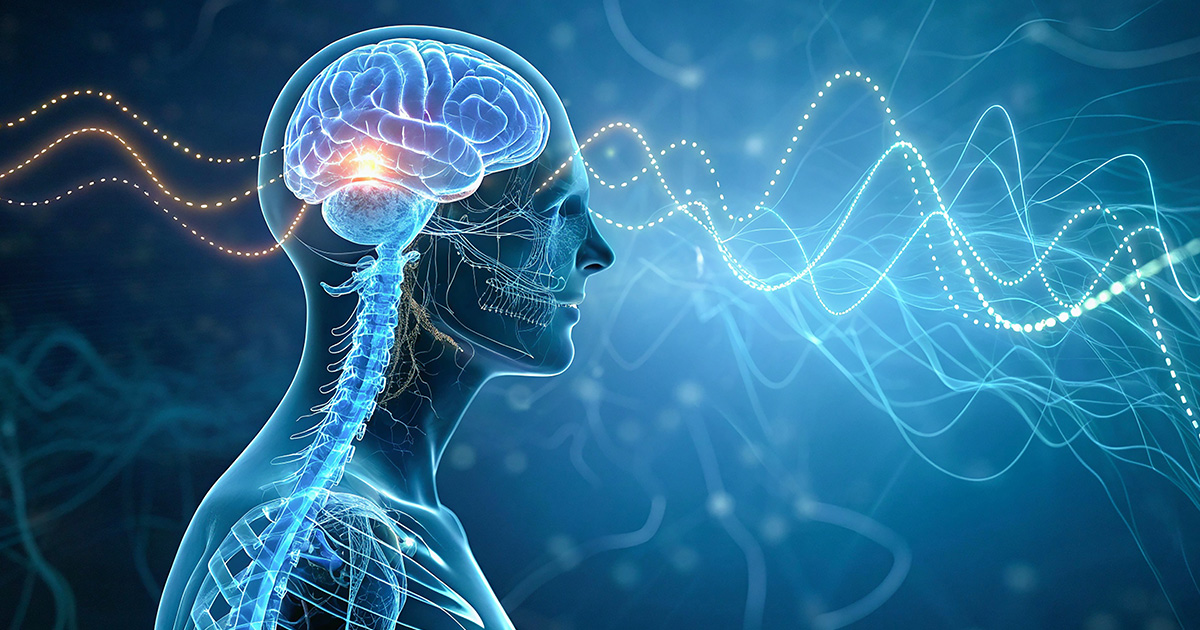
Your brain is the control centre for every muscle contraction. It combines sensory information from your body with your intended movement, then decides which muscles to activate, when to activate them and how much force they should produce. So, could better communication between your spine and brain help your nervous system use your muscles more effectively?
What does the research show?
Research suggests that dysfunctional spinal segments—sometimes called vertebral subluxations or central segmental motor control problems—can alter the sensory information the spine sends to the brain.¹
The small muscles close to the spine contain many sensory receptors called muscle spindles. These help the brain monitor spinal movement and maintain an accurate map of the body. When a spinal segment is not moving or being controlled appropriately, this information may become less accurate, potentially affecting how efficiently the brain controls muscles.¹
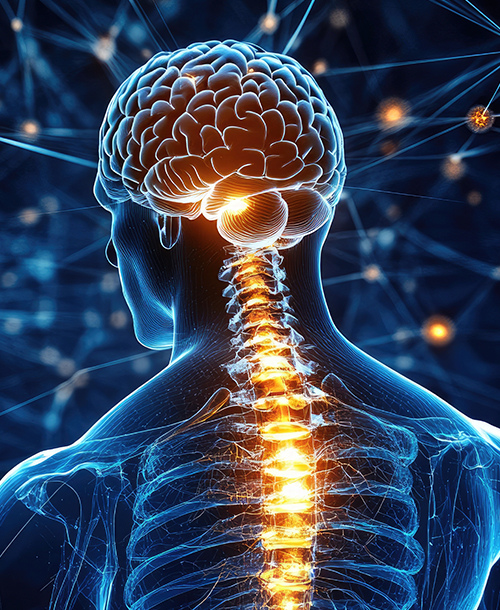
A chiropractic adjustment rapidly stretches tissues surrounding a dysfunctional spinal segment, creating a powerful burst of sensory information to the central nervous system. This may help the brain update its body map and improve muscle recruitment.¹
Several studies have reported measurable strength changes following chiropractic adjustments. One found a 16% increase in ankle plantar-flexor force after a single session. Participants also resisted fatigue during maximal contractions, while the control group became weaker.²
Elite taekwondo athletes demonstrated an average 7.6% increase in plantar-flexor strength,³ while a small study of people with chronic stroke found an average 64.2% increase.⁴ The much larger percentage in the stroke group probably reflects their greater initial weakness.
Changes have also been observed in upper-limb and trunk muscles,¹ as well as in maximal bite force.⁵ Four weeks of chiropractic care in active-duty military personnel with low back pain also increased maximum pulling strength.⁶
These changes appear to occur mainly in the nervous system. Following one chiropractic session, V-wave amplitude—a measure related to the brain’s drive to a muscle—increased by 45%, alongside the 16% increase in force.² Three weeks of strength training produced a V-wave increase of approximately 55% in another study.⁷ This suggests that some neural changes following an adjustment may resemble those produced by strength training.
An adjustment does not replace exercise or build muscle like resistance training. Rather, it may help the nervous system access and use existing muscle capacity more effectively.
Although larger studies are needed to determine how long these effects last and their clinical significance, the emerging message is exciting: by changing the sensory conversation between the spine and brain, chiropractic care may influence how effectively the brain controls movement, produces force and resists fatigue.
Disclaimer and References
This information is provided for educational purposes only. It is not intended to be professional advice of any kind. Haavik Research Ltd encourages you to make your own healthcare decisions based on your own research and in partnership with a qualified healthcare professional.
- Haavik et al. Eur J Appl Physiol. 2021;121:2675–2720.
- Niazi et al. Exp Brain Res. 2015;233:1165–1173.
- Christiansen et al. Eur J Appl Physiol. 2018;118:737–749.
- Holt et al. Sci Rep. 2019;9:2673.
- Haavik et al. Brain Sci. 2018;8:76.
- Vining et al. J Altern Complement Med. 2020;26:592–601.
- Vila-Chã et al. J Appl Physiol. 2012;112:54–63.