
Research suggests chiropractic care may influence parts of this ongoing inner story.
What is your inner world?
Your brain doesn’t sit quietly waiting for something exciting to happen. Even when you daydream, remember a conversation, imagine tomorrow, or wonder why you feel “off”, a collection of connected brain regions works behind the scenes.

This is called the default mode network. Think of it as part of your brain’s inner-world network. It helps weave together bodily sensations, memories, emotions and expectations to create a meaningful picture of you.²
Your brain never receives a simple daily report saying, “Everything is fine!” It has to work that out from a constant stream of sensory messages arriving from throughout your body. Your spine contributes to that stream. So if the messages from your spine change, could your brain’s picture of you change too?
What does the research show?
This is where chiropractic becomes really interesting.
Your spine constantly sends your brain information about where your body is and how it moves. Changes in spinal movement or function—sometimes described as vertebral subluxations—may alter that information.
A chiropractic adjustment creates a quick burst of sensory input from receptors around the spine. It’s like giving the brain a fresh update from an area it may not have been reading accurately.
In a randomised controlled study, 76 adults received either four weeks of chiropractic care alongside usual care or usual care alone. Researchers used EEG—essentially listening to the brain’s electrical chatter—to examine brain activity. They also measured sensory processing, sleep and participants’ health.¹
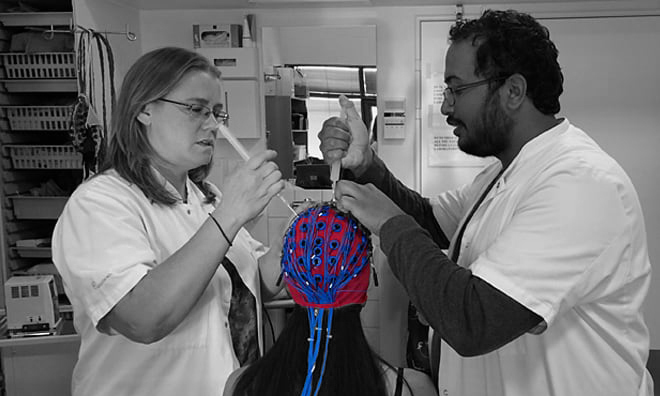
Changes appeared immediately after the first chiropractic session. Alpha activity increased within the default mode network. Alpha rhythms help brain regions coordinate and determine which information deserves attention.
Importantly, this was not one adjustment followed by a check a month later. Participants received chiropractic care throughout the four weeks. When assessed again, changes in default mode network activity were still evident.
After the four weeks, participants who had received the chiropractic care reported less anxiety, depression and fatigue, together with better overall quality of life. The quality-of-life improvement was considered clinically meaningful. Wrist-worn trackers also recorded more light sleep.
This is a fascinating combination: measurable brain changes alongside improvements in how people felt and functioned. The researchers note that larger studies are needed to better understand what happens in patients’ brains and bodies when they receive chiropractic care.
One possible explanation is that clearer sensory information from the spine helps the brain refresh its internal body map—and update the story it tells about how safe, tired, uncomfortable or well the body feels.
Chiropractic care may therefore involve more than changing spinal movement. By influencing the conversation between the spine and brain, it may also influence the brain’s most personal creation: your experience of you.
Disclaimer and References
This information is provided for educational purposes only. It is not intended to be professional advice of any kind. We encourage you to make your own healthcare decisions based on your own research and in partnership with a qualified healthcare professional.
- Haavik et al. Brain Sci. 2024;14:1124.
- Menon. Neuron. 2023;111:2469–2487.